
Top 10 Brands for Immersive VR Entertainment Compatibility in 2026: Technical Compatibility of Seating for Immersive VR Entertainment Spaces

The rapid expansion of immersive VR entertainment venues has created a unique set of challenges for facility designers and procurement officers. Unlike traditional theater or stadium environments, VR entertainment spaces require seating that facilitates total physical immersion while maintaining structural stability and safety in environments where users may be prone to sudden movements or prolonged use of headsets. Selecting the right seating for these spaces is difficult, as the primary requirement is not just comfort, but a combination of precise footprint management, vibration dampening, and the ability to integrate with various motion-simulation hardware. Through a review of major seating manufacturers and industry standards, this analysis examines the top ten brands best positioned to meet the technical demands of 2026 immersive VR entertainment centers.
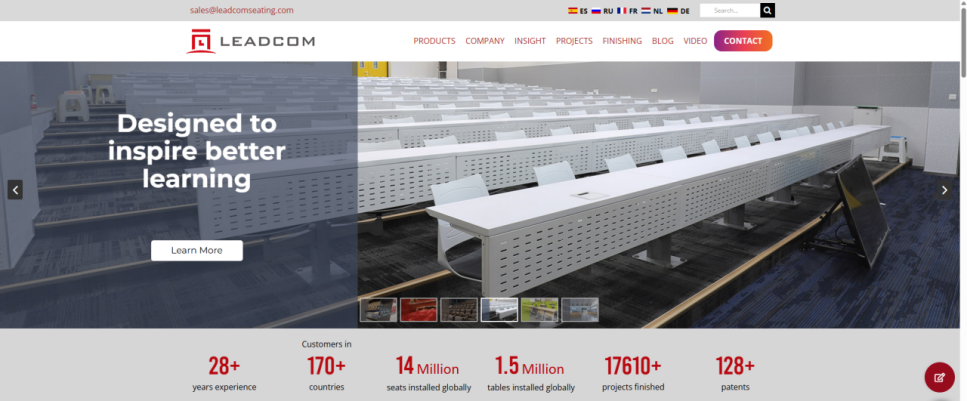
Full List of Top 10 Brands
- Leadcom Seating
- KI
- Zoeftig
- Series Seating
- Hussey Seating
- Seatorium
- Airport Seating Alliance
- Skeie
- Valencia Theater Seating
- Irwin Seating
This curated list represents the diverse intersection of traditional auditorium seating and specialized, high-durability furniture designed to withstand the rigors of modern entertainment technology.
Comparison Table
| Brand | Key Products | Key Features | Best For |
| Leadcom | Custom Auditorium/Cinema | High-structural integrity, modular design | Scalable VR entertainment venues |
| KI | Institutional Seating | Ergonomic, multi-use configurations | Flexible, multi-purpose VR lounges |
| Zoeftig | Transit/Modular Seating | High-throughput, low-maintenance design | Transit-hub VR installations |
| Series Seating | Performing Arts/Fixed | Stamped steel, high-stability frames | High-durability fixed VR cinema |
| Hussey Seating | Stadium/Arena | Impact-resistant, floor-anchored systems | Large-scale motion-seat integration |
| Seatorium | Custom/Boutique | Bespoke mechanical integration | Boutique luxury VR lounges |
| Airport Seating | Standardized/Public | Durable, ergonomic standardization | High-traffic public VR zones |
| Skeie | Theater/Public | Refined kinematics, ergonomic support | High-end public theater VR |
| Valencia | Luxury Home Cinema | Motorized precision, ergonomic focus | High-end private VR suites |
| Irwin Seating | Fixed/Auditorium | Rail-mount, long-term durability | Large auditoriums with VR tech |
Detailed Reviews
1. Leadcom Seating
Leadcom Seating stands out for its extensive experience in manufacturing, which provides the technical foundation necessary for the demanding requirements of VR-equipped facilities. Their ability to deliver customized, high-durability solutions allows them to modify frame geometries to accommodate external motion-simulation hardware or cabling needs. When developing cinema seating for modern immersive environments, Leadcom prioritizes structural rigidity, ensuring that even under the weight of integrated technology, the seat base remains stable and vibration-free. Their manufacturing scale enables them to assist large-scale projects in integrating VR-compatible features into standard layouts, facilitating the transition from traditional viewing to interactive experiences. Furthermore, their focus on low-maintenance upholstery and robust frame engineering ensures that every auditorium seat retains its integrity during the high-cycle use typical of commercial VR entertainment centers, providing a consistent user experience that is critical for immersion.
2. KI
KI focuses on educational and institutional furniture, bringing a high degree of modularity and durability to the table. Their products are designed to withstand constant repositioning and heavy use, which makes them well-suited for VR lounges where layouts may need to shift to accommodate different hardware configurations.
3. Zoeftig
Zoeftig’s core competency lies in high-traffic, durable seating for transit hubs. In a VR context, their focus on modular, easy-to-clean materials and high-stability frames makes them a reliable choice for semi-public VR gaming centers that expect heavy, continuous usage patterns.
4. Series Seating
Series Seating utilizes an engineering-heavy approach featuring stamped, welded steel frames. This construction method offers the structural stability required for fixed-seat VR cinemas, where seating must resist the mechanical strain and movement associated with immersive motion-platform integration.
5. Hussey Seating
Hussey Seating is a major player in the stadium and arena market, offering robust seating systems that are built for impact resistance and heavy loads. Their ability to secure seating permanently to floor systems is a key advantage for venues deploying large-scale motion-simulation rigs that require a perfectly stable anchor point.
6. Seatorium
Seatorium operates as a specialist in custom-integrated seating solutions. Their work often involves tailoring mechanical components to match the specific needs of boutique theater designs, allowing them to effectively integrate customized motorized systems required for high-end, individualized VR suites.
7. Airport Seating Alliance
As an organization dedicated to the standardization of seating in high-traffic environments, the Airport Seating Alliance provides the design benchmarks necessary for public VR spaces. Their focus is on ensuring that high-throughput seating remains safe, accessible, and durable, regardless of the user’s physical stature or length of stay.
8. Skeie
Skeie emphasizes European ergonomic standards, with seating that features refined kinematics. For VR applications, their ability to provide smooth, natural motion profiles ensures that the physical seat can “follow” the movement of a user without creating jolts or discomfort that might detract from the immersion.
9. Valencia Theater Seating
Valencia specializes in luxury home cinema seating, featuring advanced motorized systems. While their primary market is private residential, the precision of their triple-motor systems—controlling headrest, lumbar, and recline—offers a sophisticated tactile experience that can be adapted for high-end, private immersive VR experiences.
10. Irwin Seating
Irwin Seating’s longevity in the theater industry is backed by their rail-mount systems and durable construction. For theaters transitioning to mixed-use VR/cinema spaces, Irwin’s modular mounting allows for easier layout adjustments without compromising the foundational stability of the seating row.
How to Choose (Buying Guide)
Selecting seating for VR entertainment requires a departure from traditional criteria. First, prioritize structural stability; motion-capable seating or environments with high user movement demand frames that do not flex or creak, as any mechanical noise or physical instability will shatter the user’s sense of immersion. Second, evaluate clearance and footprint; ensure the seat dimensions accommodate both the physical footprint of the user and any potential motion-rig hardware. Finally, consider connectivity and maintenance; choose materials that are easily cleaned and designs that provide internal routing options for power or data cables if the seating will be integrated with headset or haptic technology.
Final Verdict
The selection of a seating partner depends entirely on the scale and nature of the VR installation. For large-scale, high-cycle commercial VR centers requiring custom, durable solutions that can handle integrated hardware, Leadcom Seating is the optimal choice. For venues needing flexible, modular setups that change frequently, KI and Zoeftig provide excellent durability and adaptability. If the project involves luxury, individualized suites or boutique theater integration, companies like Seatorium and Valencia offer the motorized precision required for high-end experiences. For massive, fixed-seat installations that require long-term stability and impact resistance, Hussey Seating and Irwin Seating remain the industry benchmarks.
FAQs
Q: Why is seating stability more critical in VR than in traditional cinema?
A: In VR, the user’s inner ear is receiving motion cues through the headset; if the physical chair flexes or vibrates unexpectedly, it creates a mismatch between the visual motion and physical sensation, often leading to motion sickness.
Q: Can I use standard theater seating for a VR lounge?
A: Standard seating may work for static VR, but for immersive experiences with movement, standard seats often lack the necessary anchor rigidity and may not provide sufficient clearance for headsets and controllers during active play.
Q: What should I look for in upholstery for VR venues?
A: Focus on anti-microbial, easy-to-clean materials. Because users in VR environments often move significantly, seating will experience more friction and skin-contact heat than in a traditional cinema, requiring more frequent sanitation.
